English हिंदी
Horoscope
🔮 Daily Horoscope ♈ Aries Mesh ♉ Taurus Vrishabh ♊ Gemini Mithun ♋ Cancer Kark ♌ Leo Simha ♍ Virgo Kanya ♎ Libra Tula ♏ Scorpio Vrishchik ♐ Sagittarius Dhanu ♑ Capricorn Makar ♒ Aquarius Kumbh ♓ Pisces Meen
Yearly 2027 · Horoscope
♈ Aries 2027♉ Taurus 2027♊ Gemini 2027♋ Cancer 2027♌ Leo 2027♍ Virgo 2027♎ Libra 2027♏ Scorpio 2027♐ Sagittarius 2027♑ Capricorn 2027♒ Aquarius 2027♓ Pisces 2027
Yearly 2027 · Numerology & More
🔢 Number 1 in 2027🔢 Number 2 in 2027🔢 Number 3 in 2027🔢 Number 4 in 2027🔢 Number 5 in 2027🔢 Number 6 in 2027🔢 Number 7 in 2027🔢 Number 8 in 2027🔢 Number 9 in 2027 🔮 Divisional Charts 📊 Ashtakavarga 🔥 Combustion
Calendar & Timing
🎉 Festivals & Vrat 🌑 Eclipse (Grahan) 🔄 Retrograde 🔢 Number Numerology 💕 Name Compatibility 🌕 Moon Phase 🌅 Sunrise & Muhurta 🧭 Disha Shool 🕯 Panchak 🤝 Friendship Match 🔮 Life Path Number
More
What's Inside About Lalbabu Mandal Free Sample Report Get My Report
🔮 Free Calculators▾
Birth Chart
🌅 Lagna / Ascendant Calculator 🌙 Moon Sign (Rashi) Calculator ☀️ Sun Sign Calculator ⭐ Nakshatra Finder 🔯 Navamsa D9 Chart 🌌 Planetary Positions Today 🔢 Ashtakvarga Report 🍼 Santan Yog (Childbirth) Raj Yoga & Dhan Yoga Videsh Yoga (Settle Abroad) Bhava Chalit Chart Planet Strength (Shadbala) Atmakaraka & Jaimini Karakas Birth Time Rectification KP Horary 1-249 Nakshatra Pada Combust Planets (Asta) Divisional Charts D1-D60
Dosha
🔴 Manglik Dosha Check 🐍 Kaal Sarp Dosh Check 🪐 Sade Sati Calculator 🙏 Pitra Dosh Check 🌑 Kemadruma Yoga ⚡ Guru Chandal Yog 🧿 Gand Mool Dosh Shrapit, Angarak & Vish Dosh Shani (Saturn) Report
Dasha & Timing
🪐 Shani Dhaiya Check ⏳ Mahadasha Calculator 🕰️ Current Dasha & Antardasha 📅 Varshphal (Yearly Horoscope) 🔭 Gochar (Transit) Report 💍 Marriage Prediction 💼 Career Prediction Yogini & Char Dasha
Panchang
📜 Today's Panchang 🕉️ Choghadiya Today ⏰ Rahu Kaal Today ⭐ Tara Bala Today 🕐 Hora Timings Today Bhadra, Kharmas & Siddhi Yoga Nakshatra Calendar Tithi Calculator Grahan (Eclipse) Dates Sunrise & Sunset Time Retrograde Planets Panchak Dates Moon Phase & Tithi Disha Shool Today
Matching
💞 Kundli Matching (36 Guna) 🔥 Manglik Matching 🌟 Nakshatra Matching 💑 Love Compatibility Love Marriage Yoga Bhakoot & Nadi Dosh Name Compatibility Friendship Compatibility
Numerology
🔢 Numerology Report 🔲 Lo Shu Grid ✍️ Name Numerology 📆 Personal Year Number Baby Name Numerology Business Name Numerology Life Path Number Mobile Number Numerology
Muhurat
🌞 Abhijit Muhurat Today 🎯 Shubh Muhurat Report Vivah Muhurat Dates Griha Pravesh Muhurat Mundan, Namkaran & Vehicle
Naming & Calendar
👶 Baby Name by Nakshatra 🎉 Hindu Festival Calendar Ekadashi Dates Amavasya and Purnima Dates Pitru Paksha and Shradh Navratri Dates Sankranti Dates Karwa Chauth Diwali Lakshmi Puja Dhanteras Govardhan Puja Bhai Dooj Chhath Puja
Remedy
💎 Gemstone Recommendation 📿 Rudraksha Recommendation 🔴 Lal Kitab Remedies 🍀 Lucky Number & Colour
Horoscope
Horoscope Today
Other
Chinese Zodiac Sign Palmistry Guide Vedic Age Calculator
Muhurat

Hora Calculator by City — Today's Twenty-Four Planetary Hours

All twenty-four horas with their ruling planets, timed from sunrise to sunrise for your location. With the cycle rule printed - including the three-step remainder that produces the order of the days of the week.

Hora Calculator

Your details

Instant · No signup · Degree-exact, working shown

Panchang dates computed from the day sign in a birth chart
Free Hora Tool

Today's 24 planetary hours

  • All 24 horas sunrise to sunrise
  • Ruling planet every hour, with what it is read for
  • Running now which hora you are in
  • The cycle rule Saturn, Jupiter, Mars, Sun, Venus, Mercury, Moon
  • The weekday order where Sunday, Monday, Tuesday came from
  • Your own sunrise which starts the count
  • Any date today or any day you choose
Start on the left → your free result appears instantly.
Your Panchang Journey

Twenty-four planetary hours from your sunrise. Every step shown.

STEP 01 · THE COUNT

All eight tests, scored

Both Sun charts are read and each of the eight tests gets its own score out of 36 — with the rule that produced it printed beside it.

→
STEP 02 · THE CHECKS

Doshas and their exceptions

Manglik, Nadi and Bhakoot are checked for both of you — and every classical exception is computed on your own charts, never assumed.

→
STEP 03 · WHAT TO DO

The practical part

Where a score came out low, you get the fix: what to do, what to avoid, and the dates when your chart support a wedding.

Your own scores are free, above. The rule behind each one, the exceptions, and the dated windows are in the full report.

The method

Hora: One Hour, One Planet, and the Oldest Reason the Week Looks Like This

A hora is a planetary hour. The stretch from one sunrise to the next divides into twenty-four of them, and each belongs to one of the seven classical planets.

The planets run in a fixed order: Saturn, Jupiter, Mars, the Sun, Venus, Mercury, the Moon. That sequence is not arbitrary either - it is the planets arranged by apparent speed, slowest first. Saturn takes about thirty years to circle the zodiac, Jupiter twelve, Mars roughly two, the Sun one, Venus and Mercury a little under a year each, and the Moon under a month. Slowest to fastest, and then it repeats.

The first hora of any day belongs to that weekday's planet. Sunday's first hora is the Sun's, Monday's is the Moon's, Tuesday's is Mars's, and so on. From there the cycle runs on through all twenty-four.

The best thing about this subject, which almost nobody prints

Take that cycle and follow it carefully.

Twenty-four hours running through a cycle of seven planets. Twenty-four divided by seven is three, remainder three. So after twenty-four horas, the cycle has completed three full rounds and moved three places further on. The planet that rules the first hora of tomorrow is always three steps along from today's.

Start with the Sun and step three: Sun, (Venus, Mercury) Moon. Step three from the Moon: (Saturn, Jupiter) Mars. Then Mercury, then Jupiter, then Venus, then Saturn, and back to the Sun.

Sun, Moon, Mars, Mercury, Jupiter, Venus, Saturn.

That is exactly the order of the days of the week. Sunday, Monday, Tuesday, Wednesday, Thursday, Friday, Saturday - in English, in Hindi, in Latin, in French. Ravivara, Somavara, Mangalavara, Budhavara, Guruvara, Shukravara, Shanivara.

The weekday sequence everyone on Earth uses is not arranged by speed, not alphabetical, and not random. It falls out of this hour cycle - and the same order shows up in Greek, Roman, Egyptian and Indian sources because they are all describing the same piece of arithmetic. Whatever you make of the astrology, the names of your days came from this table.

A hora is not sixty minutes

This catches people out. In the classical division, daylight splits into twelve horas and night into twelve - so a day hora and a night hora are different lengths, and both change through the year.

In Delhi in late June, daylight runs about fourteen hours, so a day hora is about seventy minutes and a night hora about fifty. In late December it reverses. Only near the equinoxes does a hora come close to sixty minutes.

Some modern treatments use flat sixty-minute hours from sunrise instead. Both are in use; we compute the classical unequal division, and the page prints the boundaries so you can see exactly where each hour starts.

What each hora is read for

The tradition pairs each hora with the nature of its ruling planet - nothing invented for the hour, just the planet's own classical significations applied to a slice of time:

  • Surya hora (Sun) - authority, dealings with officials, matters of standing.
  • Chandra hora (Moon) - anything gentle, domestic matters, approaching someone softly.
  • Mangal hora (Mars) - effort, physical work, anything that needs pushing through.
  • Budh hora (Mercury) - correspondence, trade, negotiation, paperwork, study.
  • Guru hora (Jupiter) - learning, teachers, formal undertakings, ceremonies.
  • Shukra hora (Venus) - arrangements, comfort, purchases, anything to do with relationships.
  • Shani hora (Saturn) - work meant to take time, labour, things that must be endured rather than rushed.

The favourable group is Jupiter, Venus, Mercury and the Moon; the harder group is the Sun, Mars and Saturn - which is the same benefic and malefic split used everywhere else in this system, exactly as in choghadiya.

Where the word hora comes from, and why it matters

The word has a longer history than the hour it names. Hora appears in Sanskrit as the name of a whole branch of Indian astrology - Hora Shastra, the predictive branch, as against Ganita (calculation) and Samhita (mundane astrology). Varahamihira's Brihat Jataka opens by placing itself in that branch.

The same root runs through Greek hora and into the English word hour, and the connection is not a coincidence. Indian and Hellenistic astrology exchanged a great deal in the early centuries of this era, and the planetary hour scheme travelled with the rest of it. The order of the rulers, the three-step remainder, the names of the days - all of it appears on both sides.

That shared history is the reason a Roman inscription, a Greek papyrus and an Indian almanac can list the same seven planets in the same order for the same purpose. It is one of the clearest pieces of evidence that this particular scheme moved between cultures rather than being invented separately in each.

Using a hora in practice

The practical appeal is speed. You need no birth chart, no software and no consultation - only sunrise, the date and the weekday. Once you know the cycle you can work out any hour in your head.

The common uses are small and specific: sending an important message in Budh hora, beginning a course of study in Guru hora, making a purchase in Shukra hora, starting demanding physical work in Mangal hora. None of that requires believing anything in particular; plenty of people use it as a nudge toward doing the right kind of task at a settled time.

The one thing worth avoiding is the opposite habit - postponing something that matters because the wrong hora is running. An hour comes round every day, the whole cycle repeats every week, and no classical source suggests a person should wait on it. A convention that starts costing you opportunities has stopped being useful.

The honest limits

A hora uses no birth details. No chart, no date of birth, nothing personal. The hora running now is the same for everyone in your city. That makes it a general convention rather than a reading of you, and it is worth being clear about which of the two you are looking at.

And an hour is a small unit. Choosing a hora is a sensible thing to do with a small decision - when to make a call, when to send something, when to set out. It is a poor substitute for thinking about a large one, and the classical writers do not ask it to carry that weight.

What a hora genuinely offers is a fast, checkable convention that costs nothing to apply. That is not a small thing. It is just not the same thing as a muhurat chosen for your chart and your purpose.
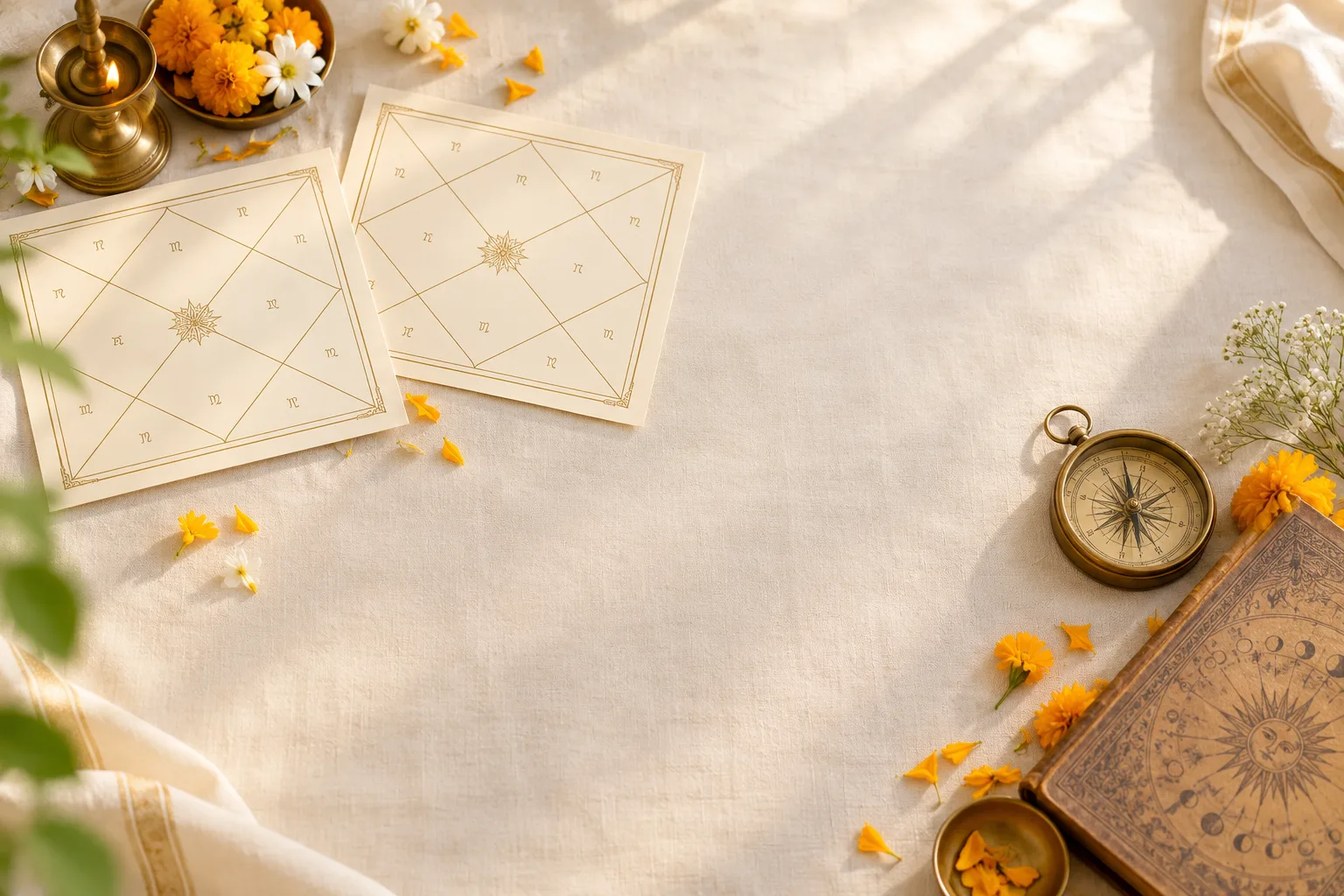

The seven planets, in order of speed
In depth

What your chart actually decides

All twenty-four, timed

Day and night horas with their start, end and ruling planet - computed from your own sunrise as unequal divisions rather than as clock hours.

The cycle, and the weekday order

How twenty-four hours through seven planets leaves a remainder of three, and how following that through produces exactly Sunday, Monday, Tuesday and the rest. With the working, because it is the best thing on this page.

Why the planets are in that order

Saturn, Jupiter, Mars, Sun, Venus, Mercury, Moon - arranged by apparent speed, slowest first. Thirty years down to under a month, and why that ordering is older than any of the systems that use it.

What each ruler is read for

Seven short readings drawn from each planet's classical significations, with the benefic and malefic grouping that the tradition applies to them.

Unequal hours and why they matter

Twelve by day and twelve by night means a hora is seventy minutes in one season and fifty in another. The boundaries printed, so you can see where each hour actually falls.

Hora against choghadiya and muhurat

Twelve and twelve against eight and eight, and both against a proper muhurat. Three tools of different resolutions, and what each is genuinely for.

The limits, stated plainly

No birth details, identical for everyone in a place, and an hour is a small unit. What that makes a hora good for, and what it does not make it good for.

Why this calculator is different

Computed like a shastra, written like a friend

🪨

Real astronomy

Swiss Ephemeris + Lahiri ayanamsa — the same standard as traditional panchangs. Both Suns computed from real birth details and real coordinates, never guessed from a name.

📅

Every score shows its rule

Every score prints the classical rule that produced it, right beside the number. Any astrologer can check our working line by line.

⚖

No fear-selling

A dosha is a signal to check, never a verdict on two people. We compute the classical exceptions on your own charts and state every remedy with its honest limit.

🗣

Both languages, same depth

The Hindi report is written natively — not machine-translated. English and Hindi carry the same free result.

Simple & honest

How it works

Enter both birth details

Date, time and place — the day sign is the anchor, and time makes it certain.

We compute both Sun charts

Swiss Ephemeris (Lahiri panchang) tracks the day through the 12th, 1st and 2nd signs from your Sun — day-level, your chart checked together.

Read your score & unlock the report

See your score, timeline and end date free; unlock the verdict, life-area guidance and remedies.

Myth vs Fact

What this calculator is not

✗ Myth: 36 out of 36 means a perfect marriage.
✓ Fact: It means thirty-six classical conditions were met. It is not a guarantee, and a score is never a probability — 20/36 does not mean a 55% chance of happiness.
✗ Myth: Below 18 gunas the match must be refused.
✓ Fact: Classical practice is to look deeper — the seventh house, the Navamsa, the doshas and their cancellations — not to refuse. Many low-scoring couples are steady; many high-scoring ones are not.
✗ Myth: Manglik dosha means widowhood or divorce.
✓ Fact: Mars in six houses raises the flag, and four classical cancellations soften or remove it — own or exalted Mars, Jupiter’s aspect, both partners Manglik, and age. It is a signal to check, never a verdict.
✗ Myth: Nadi dosha means you cannot have children.
✓ Fact: Nadi is a classification within Jyotish linked to vitality, not a medical or genetic finding — and it carries three named cancellations. Any report that turns it into a medical claim is overstepping.
✗ Myth: A costly puja will remove the dosha.
✓ Fact: A remedy is a discipline that trains the conduct the chart asks for. No remedy rewrites the chart. Every remedy in our report carries its honest limit.
Go further

Related Free Tools

Straight answers

Questions people actually ask

Hora kya hai?
A planetary hour: the day and night each divided into twelve parts from your sunrise and sunset, assigned to the seven planets in a fixed order starting with the weekday's lord.
Which hora is shubh?
Jupiter, Venus, Mercury and Moon horas for most beginnings; Sun for authority; Mars for courage; Saturn for labour and land.
Why is hora different by city?
Because sunrise and sunset differ. The page computes the horas from your coordinates.
Is there a night hora?
Yes - twelve horas from sunset to sunrise, continuing the same order. The page prints both tables.
Which hora for starting a business?
Mercury or Jupiter, ideally on Wednesday or Thursday. The page marks them for today and tomorrow.
Is the hora calculator free?
Yes - today's and tomorrow's 24 horas for your city, with the current one live, are free.
What is a hora?
A planetary hour. The time from one sunrise to the next divides into twenty-four, and each part belongs to one of the seven classical planets.
Is a hora exactly sixty minutes?
Usually not. The classical division splits daylight into twelve and night into twelve, so day horas are longer in summer and shorter in winter. Only near the equinoxes are they close to sixty.
What is the order of the hora rulers?
Saturn, Jupiter, Mars, the Sun, Venus, Mercury, the Moon - arranged by apparent speed, slowest to fastest, cycling continuously.
Which hora does my day start with?
The one belonging to that weekday's planet. Sunday starts with the Sun, Monday with the Moon, Tuesday with Mars, and the cycle runs on from there.
Why are the days of the week in that order?
Because of this cycle. Twenty-four hours through seven planets leaves a remainder of three, so each day starts three steps along - and following that through gives exactly Sunday, Monday, Tuesday and the rest.
Which horas are good?
Jupiter, Venus, Mercury and the Moon are read as favourable; the Sun, Mars and Saturn as harder. The same benefic and malefic split used throughout this system.
What is Guru hora used for?
Jupiter's hour - read for learning, teachers, ceremonies and formal undertakings. Often the first choice when something needs to be begun properly.
What is Shukra hora good for?
Venus's hour - arrangements, purchases, comfort and anything involving relationships.
Is Shani hora bad?
Saturn is read for delay rather than for harm. Shani hora is traditionally used for work meant to take time and endurance, rather than avoided outright.
Does a hora use my birth chart?
No. It uses only your location, the date and the weekday. The hora running now is the same for everyone in your city.
Can I use hora for a big decision?
It is an hour, and no chart is involved. Sensible for a small choice; a poor substitute for thinking about a large one, and the classical sources do not claim otherwise.
How is hora different from choghadiya?
Choghadiya divides day and night into eight parts each with seven names. Hora divides into twelve and twelve with seven planets. Same idea, different resolution.
Do horas run at night?
Yes - twelve by day and twelve by night, twenty-four in all. A page giving only twelve has given you half.
Why do two sites show different hora timings?
Usually the sunrise, occasionally because one uses flat sixty-minute hours rather than the classical unequal division.
What is the connection between hora and horoscope?
The words share a root. Hora is an old unit of time and also names a whole branch of Indian astrology - Hora Shastra - which is the predictive branch.
Is there a paid report for hora?
No. It is a timing table and it belongs on a free page. Our Shubh Muhurat calculator has a full report for choosing a time for a specific occasion.
Key questions, answered

Hora, Explained Properly

This hora calculator by city answers the six questions people search most — shubh hora today by location, hora chart day and night, hora for new business, surya hora and chandra hora, hora kaise dekhe — each with the rule behind it. The hora calculator by city above computes your own result free; the sections below explain what it means, and a hora calculator by city that shows its working is one you can check against any astrologer.

Hora Calculator by City — the Day Divided by Twenty-Four

A hora calculator by city divides the daylight into twelve equal horas and the night into twelve more, and assigns a planet to each in the fixed Chaldean order Sun, Venus, Mercury, Moon, Saturn, Jupiter, Mars, starting with the weekday's lord at sunrise: Sunday starts with the Sun hora, Monday with the Moon, Tuesday Mars, Wednesday Mercury, Thursday Jupiter, Friday Venus, Saturday Saturn. This hora calculator by city cuts the horas from your coordinates' sunrise and sunset, so a day hora in June is longer than one in December and the times are right for your town.

Shubh Hora Today by Location — Which Planets Are Favourable

Shubh hora today by location means the horas of Jupiter (Guru), Venus (Shukra), Mercury (Budh) and the Moon (Chandra) — the benefics — used for most beginnings, with the Sun hora for authority and government work. Mars hora is for courage, competition and surgery; Saturn hora for labour, land and long-term matters, and otherwise avoided for starts. Shubh hora today by location on this page is highlighted in the twenty-four-row table, the current hora marked live, with the work each hora suits beside it.

Hora Chart Day and Night — the Full Cycle

A hora chart day and night shows why the planetary order works: twenty-four horas in the seven-planet sequence advance the starting planet by three each day, which lands exactly on the next weekday's lord — that is where the weekday order Sun, Moon, Mars, Mercury, Jupiter, Venus, Saturn comes from. A hora chart day and night on this page is printed as two twelve-row tables for your city, with the night horas from sunset to the next sunrise, because a signing at 9 pm or a journey at 5 am is a night-hora question.

Hora for New Business — Mercury, Jupiter, and the Weekday

Hora for new business prefers the Mercury hora (trade, accounts, communication) and the Jupiter hora (growth, finance, wisdom), with Venus for luxury, arts and hospitality, and the Moon for anything public-facing. Combined with the weekday — Wednesday for trade, Thursday for finance — a Mercury hora on a Wednesday is the classical registration time. Hora for new business on this page marks those horas for today and tomorrow, and links to the shubh muhurat calculator for the opening day itself.

Surya Hora and Chandra Hora — the Two Lights

Surya hora and chandra hora are the most used pair: the Sun's hour for government work, applications to authority, medicine and anything needing visibility; the Moon's hour for travel, water, the public, women's matters and anything needing softness. The first hora after sunrise is always the weekday lord's, so Sunday's first hour is Surya hora and Monday's is Chandra hora. Surya hora and chandra hora on this page are named with their minutes in the day's table, and the note that the Sun hora is avoided for Moon matters and vice versa.

Hora Kaise Dekhe — Var Ka Swami, Phir Kram

Hora kaise dekhe by hand: take the weekday's lord as the first hora at sunrise, then follow the fixed order Sun, Venus, Mercury, Moon, Saturn, Jupiter, Mars, repeating, each hora one-twelfth of the day or night. Hora kaise dekhe on this page is the table above for your city — the current hora highlighted, the four benefic horas in green, tomorrow available — so the next favourable hour for a call, a purchase or a departure is one glance away.

Myth vs Fact

Five things people get wrong about hora

✗ Myth: A hora is sixty minutes.
✓ Fact: It is one-twelfth of the day or night, from about 45 to 75 minutes by season and city.
✗ Myth: The hora order is the weekday order.
✓ Fact: The hora order is Sun, Venus, Mercury, Moon, Saturn, Jupiter, Mars. The weekday order comes from it, every 24 horas.
✗ Myth: Hora is the same as choghadiya.
✓ Fact: Choghadiya cuts the day into eight named slots; hora into twelve planetary hours. They are separate systems and can be used together.
✗ Myth: Saturn hora is always bad.
✓ Fact: It is avoided for beginnings but preferred for labour, land, iron and long-term matters.
✗ Myth: Hora is enough for a muhurat.
✓ Fact: It picks the hour. The day needs the tithi, nakshatra and your tara bala first.

If you came to this hora calculator by city to check a result from another app, compare the degree, not just the sign — two tools using different ayanamsas will disagree by about a sign near boundaries. This hora calculator by city prints Lahiri, the value used, and every intermediate step, so the hora calculator by city result can be verified line by line.

Go deeper

Related Calculators

Also useful

More calculators

From the method

How this is read

Be the first to review this reading.

Rate & Review

★★★★★

Lalbabu Mandal, Vedic astrologer and founder of AstroMool

Lalbabu Mandal

Vedic Astrology Practitioner · Founder, AstroMool

Every AstroMool reading is generated from your exact birth chart using the Swiss Ephemeris and classical Parashari & Jaimini principles, then reviewed for accuracy — no generic templates, no guesswork. Last updated: September 2026

Page generated: 23 Sep 2026, 11:07 IST  ·  build cp-2609231107

✦ 100% Real Birth-Chart · Swiss Ephemeris 🔒 Secure Payment ⚡ Instant PDF Delivery 👤 Reviewed by Lalbabu Mandal