Matching
Nakshatra Matching Calculator by Date of Birth — Ten Poruthams, Rajju Checked, Every Rule Shown
Free from your birth chart — is the Moon's Nakshatra Matching running on both Moon signs, which test, and exactly when it ends.
Free from your birth chart — is the Moon's Nakshatra Matching running on both Moon signs, which test, and exactly when it ends.
guna milan reads both Moon charts — the birth-star, the sign and the quarter within it produce the eight tests and your total out of 36. Your own scores are in the free result above; the rule behind each one, and what it means day to day, is in the full report.
Instant premium PDF · secure payment · delivery guaranteed
Both Moon charts are read and each of the eight tests gets its own score out of 36 — with the rule that produced it printed beside it.
Manglik, Nadi and Bhakoot are checked for both of you — and every classical exception is computed on your own charts, never assumed.
Where a score came out low, you get the fix: what to do, what to avoid, and the dates when both charts support a wedding.
Your own scores are free, above. The rule behind each one, the exceptions, and the dated windows are in the full report.
There is no single system of star matching in India. There are two, they are both classical, and they frequently disagree about the same couple.
In the south - Tamil Nadu, Kerala, Andhra, Karnataka - matching is done by ten poruthams: Dina, Gana, Mahendra, Stree Deergha, Yoni, Rasi, Rasyadhipathi, Vashya, Rajju and Vedha. They are not added into a score. Each is read on its own, and Rajju carries more weight than any of the others.
In the north, matching is Guna Milan: eight kootas scored out of thirty-six, with Nadi worth eight points and Bhakoot worth seven. It is the system nearly every website means when it says "kundli matching".
Here is the part almost nobody tells you. Guna Milan does not check Rajju at all - and Rajju is the most serious objection in the entire southern tradition. A couple can pass Guna Milan comfortably and fail Rajju outright. Which verdict a family hears depends on where the astrologer trained, not on the charts.
This page runs both systems, prints the rule above every single result so you can check it against any authority, and marks the places where the two traditions reach different conclusions about your match. We are not going to choose the tradition that gives the nicer answer.
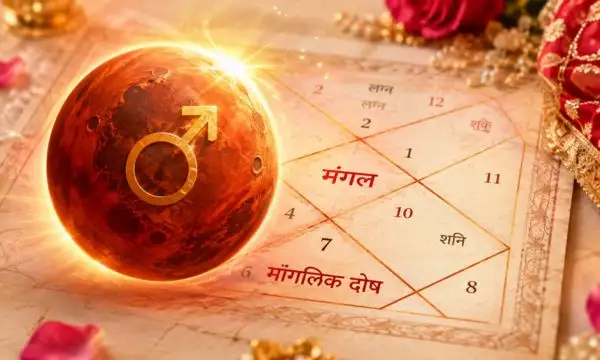
Both Moon positions to the degree, the nakshatra and the pada for each, the ruling planet, the gana and the rajju group. Everything that follows is computed from these two positions, and they are printed first so the rest can be checked.
Each one on its own page: what it measures, the exact rule, what your two charts show against it, what the authorities differ on, and what a failure actually means in that tradition - which is rarely what the internet says it means.
The single most serious rule in the southern system and the one Guna Milan ignores. What the five body-parts mean, where your two stars fall, what the texts say when they coincide, and what they do not say. This chapter exists because a rule that can stop a marriage deserves a page rather than a line.
The full thirty-six point ledger with the classical source behind each score. Nadi and Bhakoot on their own pages, because between them they carry fifteen of the thirty-six and both are all-or-nothing.
Every classical cancellation checked, including the ones that do not apply to you. Nadi has several documented exceptions and most readings never mention them - a match rejected without checking them was rejected on an incomplete reading.
Set side by side, rule against rule, with the disagreements marked. Plus what to do when your family follows one tradition and the other family follows the other, which is a real situation and nobody writes about it.
Both systems read only the Moon. This part covers what they leave out and reads it for your two charts: the 7th house in each, Venus and Mars, Mangal dosha checked from all three references, and the dashas each of you is running. Plus twenty questions answered from your charts, and a technical appendix.
Swiss Ephemeris + Lahiri ayanamsa — the same standard as traditional panchangs. Both Moons computed from real birth details and real coordinates, never guessed from a name.
Every score prints the classical rule that produced it, right beside the number. Any astrologer can check our working line by line.
A dosha is a signal to check, never a verdict on two people. We compute the classical exceptions on your own charts and state every remedy with its honest limit.
The Hindi report is written natively — not machine-translated. English and Hindi carry the same 79-page depth, chapter for chapter.
Date, time and place — the Moon sign is the anchor, and time makes it certain.
Swiss Ephemeris (Lahiri sidereal) tracks the Moon through the 12th, 1st and 2nd signs from your Moon — day-level, both charts checked together.
See your score, timeline and end date free; unlock the verdict, life-area guidance and remedies.
 🔒Both Charts
 🔒Ten Poruthams
 🔒Rajju & Vedha
 🔒Family & Money
 🔒Both Systems
 🔒Remedies
Full-page part plates, 11 computed tables — unlocked instantly.
A PDF in English or Hindi, computed from both charts, in your inbox within minutes of paying Rs 99.
Every date computed from your own chart — nothing generic, nothing guessed.

| What you get | Free | Full Report |
|---|---|---|
| Both traditions run separately | ✓ | ✓ |
| All ten poruthams with their rules | ✓ | ✓ |
| All eight kootas with the points | ✓ | ✓ |
| Rajju read in full | ✓ | ✓ |
| Vedha checked | ✓ | ✓ |
| The exceptions that apply to you | ✓ | ✓ |
| Where the two systems disagree | ✓ | ✓ |
| One page per porutham | ✗ | ✓ |
| Nadi and Bhakoot on their own pages | ✗ | ✓ |
| Every exception, including those that do not apply | ✗ | ✓ |
| Mangal dosha in both charts, three references | ✗ | ✓ |
| The 7th house in both charts | ✗ | ✓ |
| Both dashas, and where they overlap | ✗ | ✓ |
| 20 answers; appendix; Hindi edition | ✗ | ✓ |
Instant PDF · from ₹99 · the same engine you just used free
The stars support the match by both traditions. What remains is the charts themselves — the 7th houses, Venus, Mars — which the report reads next.
Common, and not a verdict. The page names which test differs and why; follow the system your family reads, and let the charts decide the rest.
The southern stop. The page prints the classical exceptions (same star, same rajju with differing pada by some schools) and says honestly if none applies.
A nakshatra matching calculator by date of birth in the southern tradition tests ten poruthams from the two Moon stars — dina, gana, mahendra, stree-deergha, yoni, rasi, rasi-adhipati, vasya, rajju and vedha — each passed or failed by its own rule, not scored. The northern guna milan scores eight kootas to 36. They share four tests and disagree on the rest, so a couple can pass one system and fail the other. This nakshatra matching calculator by date of birth runs both, prints every rule, and explains each disagreement instead of hiding it behind a percentage.
Nakshatra matching for marriage reads the couple in ten questions: dina (health and prosperity, from the star count), gana (temperament: deva, manushya, rakshasa), mahendra (progeny and protection), stree-deergha (the bride’s star well ahead of the groom’s), yoni (physical harmony, by animal), rasi (the Moon signs’ distance), rasi-adhipati (friendship of the sign lords), vasya (mutual influence), rajju (the five body-groups) and vedha (stars that obstruct each other). Nakshatra matching for marriage in this nakshatra matching calculator by date of birth prints all ten with the rule that decided each.
A 10 porutham calculator should not stop at a count: the texts weigh dina, gana, yoni, rasi and rajju above the rest, and treat rajju as a stop rather than a score. Five of ten is the classical floor, but five including rajju failed is not a pass. This 10 porutham calculator — the core of any nakshatra matching calculator by date of birth — prints the count, the weighted read, and the one line that matters — whether rajju clashes — before anything else.
Rajju porutham divides the 27 nakshatras into five rajjus — pada (foot), uru (thigh), nabhi (navel), kantha (neck) and shiro (head) — and the rule is simple: the same rajju for both is avoided, with shiro the heaviest and pada the lightest. It is the one porutham the southern texts do not trade against the others. Rajju porutham in this nakshatra matching calculator by date of birth is printed with both stars’ rajjus, and if they match, the page says so plainly and names the classical exceptions rather than burying it.
Dina, gana and mahendra — dina gana mahendra in every southern table — are the three poruthams where regional tables differ most. Dina counts from the bride’s star to the groom’s and passes on certain remainders; gana pairs deva, manushya and rakshasa temperaments with rakshasa–deva the classical clash; mahendra passes when the groom’s star is the 4th, 7th, 10th, 13th, 16th, 19th, 22nd or 25th from the bride’s. Dina gana mahendra are printed by this nakshatra matching calculator by date of birth with the count and the table used, so a family astrologer can check them against his own.
Star matching is what most families call nakshatra porutham, and the word hides the method: it is not one star “matching” another but ten separate tests between them. Star matching in this nakshatra matching calculator by date of birth also flags the same-star case — allowed for some stars, avoided for others — and the vedha pairs (Ashwini–Jyeshtha, Bharani–Anuradha, and the rest) that obstruct each other regardless of the other nine.
A nakshatra compatibility chart is the 27×27 grid of every star pair; the page does not print the whole grid but reads your row and column — the groom’s star against the bride’s and the reverse, because stree-deergha and dina are directional. The nakshatra compatibility chart entry for your pair is printed with the ten results, which is more useful than a grid of numbers with no rules behind them.
Nakshatra milan in the north is the 36-point ashtakoot; in the south it is the ten poruthams; the shared ground is yoni, gana, rasi (bhakoot) and vasya. The disagreements are real: nadi is the north’s heaviest test and the south does not check it; rajju is the south’s stop and the north ignores it. Nakshatra milan in this nakshatra matching calculator by date of birth shows both verdicts side by side and says which system each family tradition follows, so the couple knows which answer their elders will ask for.



Be the first to review this reading.

Every AstroMool reading is generated from your exact birth chart using the Swiss Ephemeris and classical Parashari & Jaimini principles, then reviewed for accuracy — no generic templates, no guesswork. Last updated: September 2026
Page generated: 21 Sep 2026, 16:03 IST · build cp-2609211603