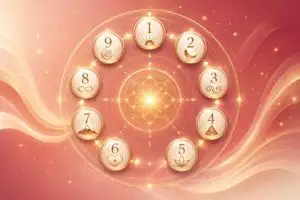
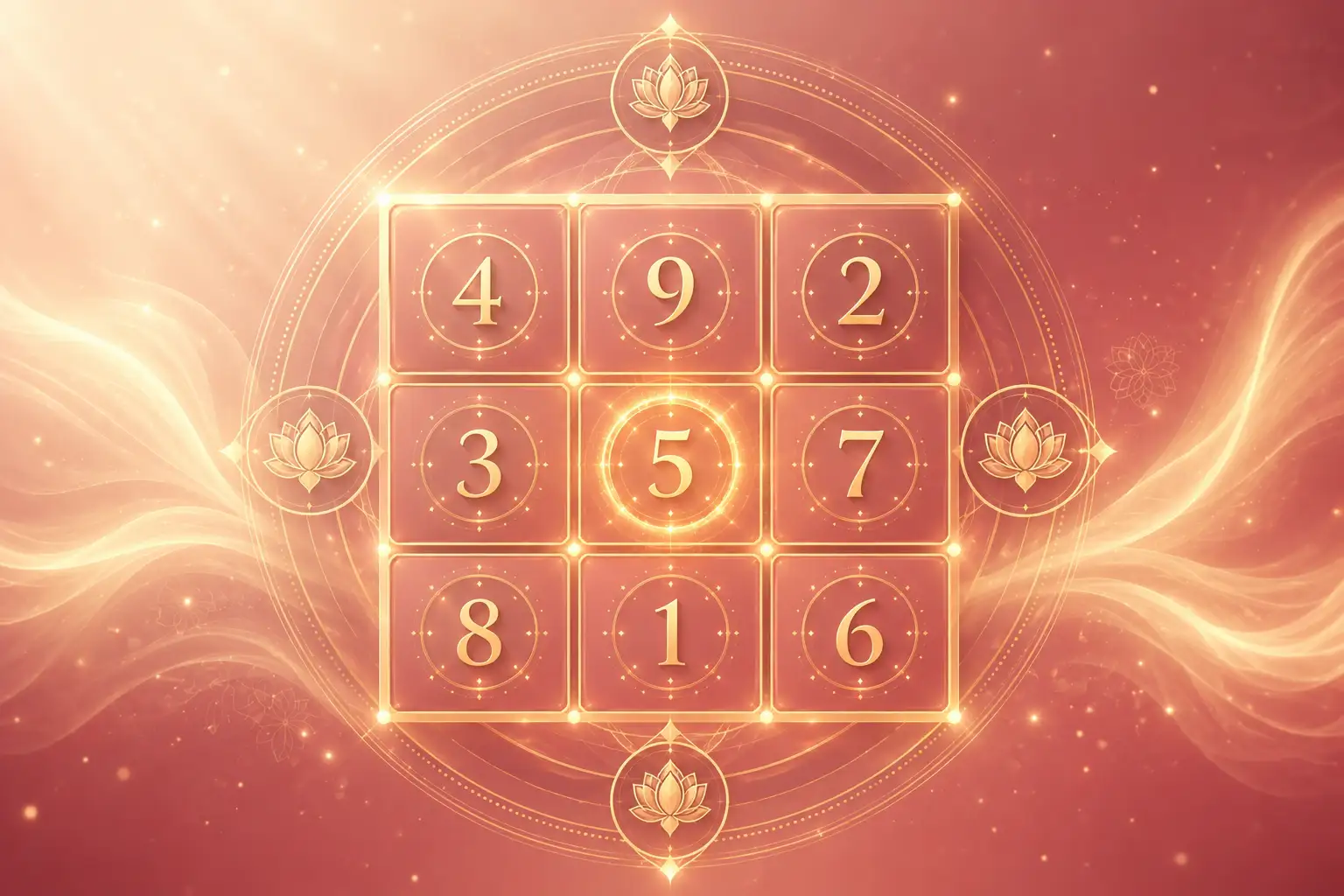
Venus, Mars and Moon measured across both charts, birth-number match from both dates — every point shown with the rule that produced it.
Love Compatibility reads both charts — the birth-star, the sign and the quarter within it produce the eight tests and your total out of 100. Your own scores are in the free result above; the rule behind each one, and what it means day to day, is in the full report.
Instant premium PDF · secure payment · delivery guaranteed
Ten pillars scored with proof, both charts, marriage timing, the risks named and the verdict in plain words — the conversation every couple avoids, done properly. 183 pages, English or Hindi, in your inbox within minutes — ₹99.
Both Moon charts are read and each of the eight tests gets its own score out of 100 — with the rule that produced it printed beside it.
Manglik, Nadi and Bhakoot are checked for both of you — and every classical exception is computed on your own charts, never assumed.
Where a score came out low, you get the fix: what to do, what to avoid, and the dates when both charts support a wedding.
Your own scores are free, above. The rule behind each one, the exceptions, and the dated windows are in the full report.
Most love compatibility calculators do one of two things: they compare two sun signs, or they compare two birth dates. This one does neither on its own. It computes both full horoscopes from your birth details - Lahiri ayanamsha, Swiss Ephemeris, the same figures any astrologer would arrive at - and then measures how the two charts meet across the three planets that actually govern love: Venus for how affection is given and received, Mars for desire and temper, and the Moon for emotional rhythm. Alongside that, it reads both birth dates through Vedic numerology for how your working natures and life directions fit.
The result is a score out of a hundred, built from ten separate pillars. Seventy points come from the two horoscopes and thirty from the two birth dates. That split is printed, every pillar is printed with the placement it came from, and the weighting is stated plainly as AstroMool's own analytical framework - because no classical text scores love out of a hundred, and this page does not pretend otherwise.
What the calculator genuinely measures is fit: whether affection sent by one of you registers as affection in the other, whether the same evening feels the same to both of you, whether desire runs evenly in both directions, and whether the two lives are pointing the same way. It does not measure feelings, it cannot read intent, and it says nothing about whether either of you is faithful - anyone who tells you a chart does those things is guessing with confidence.
Three things sit outside the free result and are read only in the full report: the Navamsa (D9) chart, which tradition trusts most for what a bond matures into; the Vimshottari dasha of both charts, which gives real dates for when the relationship runs warm and when it runs cold; and the fifth, seventh and eighth houses of both charts, which decide whether you enjoy each other, whether you can be partners, and whether you can be unguarded together.
Seventy points come from the horoscopes. Venus and Venus (14) asks whether affection given is affection received - the single commonest cause of two people both trying and both feeling unloved. Mars to Venus (14) measures attraction in both directions separately, because it is almost never equal. Moon and Moon (12) reads emotional rhythm: whether the same day lands the same way inside two heads. Ascendant and ascendant (10) reads daily pace - meals, leaving the house, deciding - which is the least romantic thing in a chart and the most present in a marriage. Navamsa (8) reads what the bond matures into. Jupiter (6) reads generosity when tired. Birth-stars (6) read the first half-second of any surprise.
Thirty points come from the birth dates. Mulank (12) compares the two working natures. Bhagyank (10) compares the direction of the two lives, which costs nothing now and everything at year ten. The couple number (8) reads what the pair becomes, which is not quite either of you.
Attraction between two charts is Mars reaching the other person's Venus. It runs from A to B and from B to A, and the two figures are almost never the same. Most calculators average them. This one prints both, because the difference between them is the single most useful thing a couple can know: it says which way the pull runs, and it explains why one of you always seems to reach first.
The same applies to Jupiter, the Sun and Saturn. His Sun to her Moon is one contact; her Sun to his Moon is another. A relationship where both directions are supported survives its own bad months. One where only one direction is supported tires the person carrying it.
A horoscope needs a birth time and a birth place. A birth date needs neither, and it reads something the chart does not: the working nature of a person (Mulank, from the day of birth) and the direction of their life (Bhagyank, from the full date). Two people with excellent chart contacts and clashing Mulanks compete for the same decisions until the work is divided. Two people with matching Bhagyanks find year ten easy even if year one was not.
This is a different system from astrology, with its own logic and its own limits. The report keeps the two separate, shows both numbers, and does not average them into something comfortable when they disagree.
The birth chart describes a relationship as it feels now. The Navamsa describes what it turns into. Tradition trusts the second one for marriage precisely because it does not care how something began. In the full report every major finding from the birth charts is re-checked in the Navamsa and marked one of four ways: confirmed, softened, rescued, or contradicted.
That last word matters. A finding that looks good in the birth chart and loses support in the Navamsa is the pattern behind every couple who says "the first years were easier". Printing it honestly tells you in advance which parts of the bond will coast and which will need building.
Both charts run their own Vimshottari dasha, computed from each Moon's exact longitude. The report prints both sequences - every main period with its start and end date - and then a month-by-month table for the coming year showing which sub-period each of you is running, and where the two line up warm at the same time.
Those dates are real; the outcomes are tendencies. A favourable window does not make anything happen. It means resistance is lower, and that is the right time for the hard conversation, the introduction to family, or the decision.
Most compatibility reports leave this chapter out, and the omission is not kindness. The full report names the ten ordinary places a bond breaks - emotional mismatch, communication, family, money, distance, ego, trust, career, commitment pace, intimacy - and scores each from your own pillars with a risk grade and the single fix that manages it. Every strain indicator is printed next to whatever in your charts argues against it.
Then it answers the question people actually have at two in the morning: can this recover after a break? Recovery strength is computed from Jupiter, the two Moons, Venus and the Navamsa, with who reaches out first, what rebuilds trust for each of you, and what must not be done after a separation.
No chart reads feelings - nobody's can. What the report does is separate the seven things that get bundled into the word "love": attraction, affection given, emotional attachment, commitment tendency, daily investment, generosity, and instinctive pull. Each is scored from your charts. A partner can be high on five and low on two, and the low two are usually what makes you doubt the whole thing.
The report also answers "who is more invested" with a six-factor matrix measured both ways - and then tells you to stop using it as evidence in arguments. The quieter partner is not loving less; they are loving in a form that shows less.
The chart mathematics is standard and verifiable. The meanings attached to each placement are classical - Venus as affection, Mars as desire, the Moon as the mind, the Navamsa as the marriage layer. The ten-pillar structure and the hundred-point weighting are AstroMool's own analytical framework, built from those traditional principles because a couple deserves to see where a reading came from instead of being handed a verdict.
And a score of N out of 100 describes the structure of the match, not a probability. It does not mean an N per cent chance that the relationship lasts. No chart computes that number, and the report says so on the page where the score appears.
Swiss Ephemeris + Lahiri ayanamsa — the same standard as traditional panchangs. Both Moons computed from real birth details and real coordinates, never guessed from a name.
Every score prints the classical rule that produced it, right beside the number. Any astrologer can check our working line by line.
A dosha is a signal to check, never a verdict on two people. We compute the classical exceptions on your own charts and state every remedy with its honest limit.
The Hindi report is written natively — not machine-translated. English and Hindi carry the same 183 page depth, chapter for chapter.
Date, time and place — the Moon sign is the anchor, and time makes it certain.
Swiss Ephemeris (Lahiri sidereal) tracks the Moon through the 12th, 1st and 2nd signs from your Moon — day-level, both charts checked together.
See your score, timeline and end date free; unlock the verdict, life-area guidance and remedies.
🔒Both Charts
🔒Eight Tests
🔒Dosha Checks
🔒Verdict & Plan
🔒RemediesFull-page part plates, 11 computed tables — unlocked instantly.
A 183 page PDF in English or Hindi, sent to your email within minutes of paying Rs 99. It is written for you, not for an astrologer. Here is what is inside.
Every date computed from your own chart — nothing generic, nothing guessed.
| What you get | Free | Full Report |
|---|---|---|
| Score out of 100 | ✓ | ✓ |
| All 10 pillars scored | ✓ | ✓ |
| Astrology / numerology split (70/30) | ✓ | ✓ |
| Strongest and weakest areas named | ✓ | ✓ |
| Love-language snapshot for both | ✓ | ✓ |
| Instant, on this page | ✓ | ✓ |
| 183 page "read this first" summary | ✗ | ✓ |
| Both horoscopes drawn (diamond charts) | ✗ | ✓ |
| Both Navamsa charts drawn | ✗ | ✓ |
| Full planet tables, both charts | ✗ | ✓ |
| Birth-time check (+5 / -5 minutes) | ✗ | ✓ |
| Each pillar with its exact reason | ✗ | ✓ |
| 12 planet-pairs, both directions | ✗ | ✓ |
| Romance, partnership, closeness houses | ✗ | ✓ |
| "Will this last" long-term check | ✗ | ✓ |
| Kundli matching, Manglik, Nadi, Bhakoot | ✗ | ✓ |
| Does this person love me - 7 layers | ✗ | ✓ |
| Who is more invested - both sides | ✗ | ✓ |
| Trust and "someone else" concerns | ✗ | ✓ |
| 10 places a bond breaks + fixes | ✗ | ✓ |
| If you break up, can you come back | ✗ | ✓ |
| How to love this person - 2 manuals | ✗ | ✓ |
| Before / after marriage | ✗ | ✓ |
| Long distance, friends, physical | ✗ | ✓ |
| Home, family, money, career, children | ✗ | ✓ |
| Dasha with dates + 12-month planner | ✗ | ✓ |
| 30-day plan + monthly checklist | ✗ | ✓ |
| Weak-area workbook | ✗ | ✓ |
| What to do when a fight happens | ✗ | ✓ |
| Remedies with their limits | ✗ | ✓ |
| Hindi edition | ✗ | ✓ |
| 183 pages, delivered in minutes | ✗ | ✓ |
These are the general pillar rules. YOUR version — tuned to which pillars actually scored low in your two charts — fills the conflict map and the 30-day plan in the full report.
Instant PDF · from ₹99 · the same engine you just used free
A love compatibility calculator by date of birth that reads only the Moon signs is a horoscope column. This one reads both full charts on ten pillars — the 7th house and its lord in each chart, Venus and Mars by sign and house, the Moon-to-Moon distance, the guna kootas, the navamsa 7th, the nodal axis, the 5th house of romance and the dasha periods running for each partner — and scores each pillar to a stated rule. This love compatibility calculator by date of birth prints every rule, so the score can be checked, not just believed.
Love compatibility by date of birth alone gives the Moon signs and the nakshatras, which is enough for the guna kootas and the Moon-to-Moon read; the birth time adds the lagna, the 7th houses and the navamsa, which is where the deeper pillars live. Love compatibility by date of birth here works with what you give — date only for a fair read, date and time for the full ten — and says plainly which pillars were skipped when the time is missing.
A love match calculator — or any love compatibility calculator by date of birth — that returns a percentage and nothing else has hidden its working. This love match calculator returns a score out of 100 built from ten pillars of ten, each with its rule and its evidence from the two charts, so a 62 tells you which four pillars are weak and why — a Mars clash, a wide Moon distance, a Venus afflicted in one chart. The number is the summary; the pillars are the answer.
Venus mars compatibility is the oldest synastry test: one partner’s Venus against the other’s Mars by sign and element, and the two Mars by sign for friction. A fire Venus with an air Mars is easy; a water Venus with an air Mars asks for patience. Venus mars compatibility in this love compatibility calculator by date of birth is scored both ways — her Venus to his Mars and his Venus to her Mars — because attraction is rarely symmetrical.
Navamsa compatibility reads the D9 chart of each partner: the navamsa lagna, the navamsa 7th and its lord, and Venus’s navamsa dignity. The texts read the D1 for attraction and the D9 for what the marriage becomes, which is why a couple with an easy D1 and a hard D9 struggles after the wedding. Navamsa compatibility in this love compatibility calculator by date of birth is one of the ten pillars, and the one most online tools leave out.
Love marriage yoga in a chart is the 5th and 7th lords connected, Venus with Rahu or the 5th lord, or the 7th lord in the 5th — the combinations the texts name for a self-chosen partner. Love marriage yoga is checked in both charts by this love compatibility calculator by date of birth, because a couple where one chart supports it and the other resists it is the commonest source of family friction, and knowing which is which is half the remedy.
Will my relationship last astrology is the question under every compatibility search, and the honest answer is a phase, not a verdict: the dashas running for each partner, the Saturn and Jupiter transits over both 7th houses, and the pillars that are weak. Will my relationship last astrology, in this love compatibility calculator by date of birth, names the next two years’ tests for the couple and the pillar each one presses — because a relationship is lived in periods, not in a single score.
Relationship compatibility astrology in the north usually stops at the 36-point guna milan, which reads the Moons and nothing else. This love compatibility calculator by date of birth keeps the kootas as one pillar and adds nine more from the full charts, so the guna score sits in context. Relationship compatibility astrology done this way says why a 30/36 couple can still clash on Mars, and why a 20/36 couple with strong 7th houses holds.